
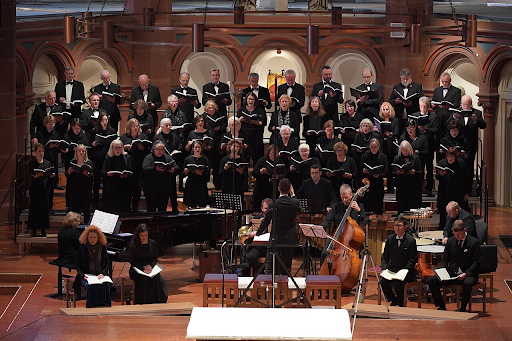
When my grandparents ramble on about how kids these days should “listen to real music,” I respond by rolling my eyes, putting in my Airpods and listening to Taylor Swift or Drake. For the first thirteen years of my life, I was never one for art. In my mind, classical music is what you put on to help you focus when studying when you feel particularly romantically intellectual. Then I came across a radio station playing high energy classical music, decided to give it a chance, and my life was never the same.
Here are three songs to start you on a similar journey of artistically profound fire:
1. “Dies Irae” by Verdi
“Dies Irae” is based on the poem of the same name, translating to “Days of Wrath”. What I love about this work is that unlike normal theological music, where a soft choir is joined by soft strings, the piece is metal-wrapped in an 1874 box of cacophonous choir and a bass drum of doom. I imagine the conductor works up a sweat trying to follow the intensity of the composition. Every good energizer song needs a beat drop, and this piece has a buildup of timpani to make the crowd go wild. The composition is a rollercoaster ride of intense, dark emotion.
2. “O Fortuna ~ Carmina Burana” by Carl Orff
You may have heard this extremely popular piece in movies, but listening to it alone with a mosh pit mindset is a different experience altogether. Nestled in Carmina Burana, a collection of 24 poems performed as music, this composition is the final boss of classical music.The middle of the piece is not intense, but rather an extended bridge, making the listener nervous with anticipation before crashing back into chaos. “O Fortuna” symbolizes the relentlessness of nature and evokes a sense of piercing intensity within me. The chorus is only rivaled by “Dies Irae” in its intensity, with a raucous wall of choir singing like the wrath of nature is descending on the audience.
3. Rachmaninoff’s “Piano Concerto 3”
This piece is the black sheep of my list. Instead of presenting earth shattering sounds, it results in shattering hands given the 45 minutes of intense playing and mad skill it requires. I admit that long piano concertos can put people to sleep, but this one doesn’t have a boring moment. An iconic cadenza with the energy of a guitar riff tethering it, the variety and the intensity of the piece force any classical hater to wake up from their slumber. The dynamics form a thunderous, room-filling sound, and repeating melodies induce me to move in the melody. Contrary to what Rachmaninoff may have said about this piece, it does not speak but yell at the soul.
These three pieces are not fit for the casual ambiance of a library; they subvert the common sentiment that classical pieces are lullabies. And they demonstrate that classical music can easily assimilate into the loud tastes of today’s society. Just remember to close the door before you press play.