
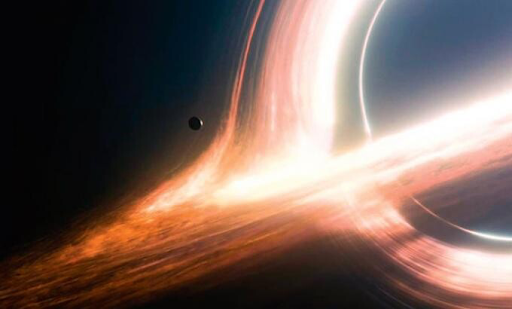
Oscar-winning filmmaker Christopher Nolan’s science fiction movies hold a reputation for being philosophical, logical, and intellectually demanding. Yet, in two of his highly acclaimed movies, Inception and Interstellar, an emotional thread subtly runs through the cold machinery of logic; when stakes are at their peak, what rescues a character is not logic but love. True to his typical style, this idea is wrapped under layers of dazzling special effects, like a concealed chamber in the heart’s deepest cavern, bursting out at the last minute to decidedly save what logic cannot. This concept matters far beyond the screen. In a current society that relies increasingly on logic and computational algorithms, love remains the only power that saves humanity from the edge of collapse, re-igniting courage, responsibility, and guiding people toward the right choice when the “rational” choice is not enough.
In Inception (2010), the main character, Cobb, is an “extractor.” He sneaks into another person’s subconscious dream state and steals information or plants ideas that will develop into a “voluntary” action in reality. To ensure absolute authenticity, Cobb’s team spends weeks building three imaginary worlds layered upon one another. As the plot progresses, the team descends further into the dream, with ten minutes becoming an hour and an hour becoming years. They must complete each task with mathematical precision in order to succeed and return safely. Here, logic rules above all.
Nolan gives the team’s ethos a singular emblem: Cobb’s spinning top. In a dream, the top will spin indefinitely, while in the real world, gravity eventually makes it fall. This “totem” is the clearest symbol for logic and reason in the entire film, always cutting through with a trustworthy, decisive verdict. Spin it, watch it fall, and confirm the world is real. A perfect plan.
However, Nolan does not simply include the spinning top as a celebration of human reason. On the contrary, he uses it to prove just how fragile logic is when hijacked by toxic grief.
This is where Mal, Cobb’s late wife, shows up.
Mal isn’t a vague tragic backstory or merely a melancholic photo stuffed in the protagonist’s wallet to be taken out and sighed at occasionally. She is an active contaminant in Cobb’s system, constantly disrupting judgement and posing the risk of pulling him into a state of limbo – a barren, disintegrating world. Throughout the movie, Cobb’s most significant challenge is not a rival thief but his inner self, because love, once plagued with guilt, does not simply bid adieu and accept the verdict of time.
What is crucial here is that Cobb cannot solve this problem with intelligence or violence. More expertise will not fix it. More ingenuity simply provides a grander architecture for the same ghost to haunt. Eventually, Cobb is forced to realize that being eternally devoted does not grant him “editing rights” to the past. What is done is done.
This is why the spinning top matters at the end of the film: it is not an infuriatingly ambiguous question for the audience but serves as the central thesis of the entire movie. When Cobb returns home and spins the totem to check reality, his children see him and begin running toward him. He eventually doesn’t bother with the spinning top as he walks away from the test and embraces his children. The scene fades to black before the totem can provide its verdict. At this moment, the overwhelming love for his children empowers Cobb to stop dwelling endlessly in the past and instead choose to love the present, leaving logic spinning helplessly on the table while love becomes the final, decisive act of the film.
Interstellar, released four years after Inception, runs along similar lines. The film begins without much to hope for: constant dust storms, failing crops, falling oxygen levels, and humanity regressed into a grim, agrarian society. It is as if the world is saying, “We are all doomed, but let’s be polite and ignore it.” People cannot afford feelings when emotions are reserved for those with the privileged luxury of clean air and food.
A former NASA astronaut, Cooper decides to leave his children and travel through a wormhole to a faraway galaxy near a black hole in order to save humanity. There, he and his team attempt to decide which planets they will prioritize using scientific data and logical reasoning.
Ironically, the crew’s logical decisions lead them to catastrophic consequences. On Miller’s ocean planet, waves as tall as mountains bombard the crew, forcing them to spend more time than planned. Three hours on the ocean planet turn into twenty-three years on Earth due to extreme time dilation near the black hole. The crew, acting rationally yet again, decides to head to Dr. Mann’s planet, only to find that Mann’s data was completely made up. Their final choice to go to Edmund’s planet, out of trust for a lover, proves to be the correct decision.
When Cooper returns to the ship after escaping Miller’s planet, he is confronted with two decades of backlogged messages. When Cooper watches his daughter Murph and his son Tom fast-forward through life, with milestones compressed into mere seconds of one-way conversation, he experiences a complete emotional unraveling. Cooper tries to hold himself together like a professional, an Atlas bearing the brunt of society’s woes. But the stoicism of the “rational man” fails him. All the pent-up stress and grief flood out in a scene where love is forced to process loss at a speed no human can digest in a lifetime, let alone a few minutes. However, out of love for his children – especially his promise to Murph – Cooper plods on with the mission, determined.
At many moments in Interstellar, love drives the turning point. When Cooper sacrifices himself to save the mission, he is pulled into a five-dimensional Tesseract, where moments in Murph’s life are stored in bookcases. Love and hope drive Cooper to transmit data from the black hole to Murph, and Murph’s intrinsic love and trust in her father allow her to comprehend the message, successfully solving the gravitational equation and saving humanity.
Love, Nolan seems to suggest, is not automatically virtuous or correct; Inception shows it can haunt the rest of your life until you become an empty shell of who you once were. Love can cling mercilessly, tempting us to discard the present in pursuit of an unrecoverable past.
However, as Interstellar illustrates, love is also the binding force between every living soul. Love is what makes humans put others before themselves and face their fears courageously. This is especially striking coming from Nolan, whose films often appear abstract at first glance. He uses a cold shell to contrast deeper human emotion, suggesting that logic can only take us so far, and it is love that provides humanity with its most innate meaning. Whether for a child,a partner, a pet, or people you will never meet, love is what unites humans together to grow into better versions of themselves. Love is Nolan’s message for today’s society.
Andrew • Apr 3, 2026 at 2:59 pm
I really enjoyed this!