
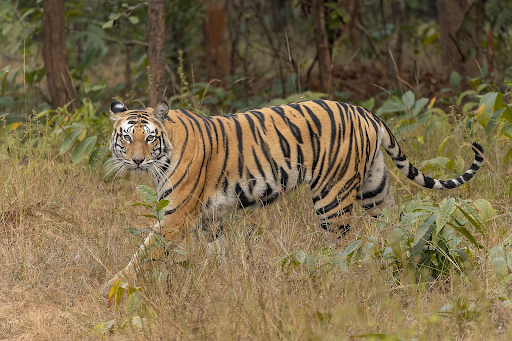
During election campaigns, politicians generally address familiar talking points such as the economy, immigration, civil rights, and taxes. While climate change occasionally does join this list, the catastrophic collapse of wildlife populations is rarely mentioned. The collapse of global wildlife is caused by a lack of public interest in defending biodiversity, resulting in a prioritization of short-term gains.
The reality is dire, according to the World Wildlife Fund’s (WWF) Living Planet Report, which revealed that the wildlife population across the globe has fallen by 73% since 1970.
“Nature provides the foundation for human health, a stable climate, the world’s economy, and life on earth,” says WWF-US President and CEO Carter Roberts.
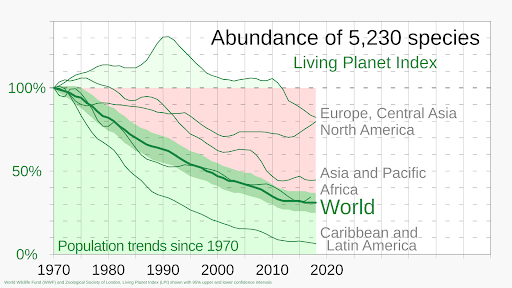
According to the WWF, habitat damage, particularly loss of habitat, degradation, and overharvesting, is primarily to blame. Other secondary causes include invasive species, disease, and climate change. These issues are almost exclusively caused by humans, though many of us seem to give little thought to this matter.
The lack of public concern about the loss of wildlife is alarming. In fact, current polls don’t distinguish it as a separate issue from the broad umbrella of climate change or the environment. According to a 2026 YouGov poll, only 5.9% of Americans picked “climate change or environment” as the top issue. This is much less than the October 2019 peak of 13%, suggesting that even though the crisis has worsened, public attention has moved away. The fact that YouGov didn’t have a separate category for “wildlife collapse” proves that we are not just failing to address, but even failing to name this threat.
Since momentum for climate change and environmental issues is on a downward trend, politicians are less likely to consider the environmental crises as a top issue. Instead, they focus on other topics such as the economy, immigration, and civil rights. While these issues are clearly important, the environment will continue to be neglected due to the lack of outrage.
Many voters prioritize issues that have a direct impact on their lives, so they fail to see how strengthening wildlife protection laws could affect them.
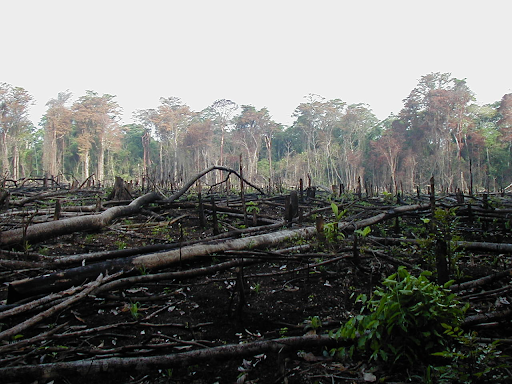
However, strengthening wildlife protection laws does, in fact, improve humanity. According to WWF, pollinators assist our food chain by pollinating food crops and trees. Wild animals help regulate nutrient flows, benefiting our fisheries and preventing “tipping points” in the already struggling Amazon Rainforest. Small underground animals improve soil quality, which again helps our food industry and helps prevent deadly flooding.
However, without more outrage, politicians who harm habitat and environmental efforts continue to win top office in the United States. A primary example is the weakening of the Endangered Species Act by the current administration. The administration weakened on what counts as a “critical habitat.” This dangerous shift will enable greater habitat destruction. This shift occurred because voters prioritized other issues, as referenced with the significant decrease in importance over the last 5 years, according to YouGov. The facts are clear. The decline not only threatens biodiversity, but it also threatens us.
If the United States, the most influential power in the world, does not lead by example of being a habitat protector, other countries are likely to follow the path of deregulation.
Overall, the facts are clear: the world’s wildlife population has collapsed in just a little over 50 years. However, this issue is rarely publicized by politicians. While environmentally friendly politicians often campaign on climate change, rather than habitat loss, which is the biggest cause of wildlife population collapse. A collapse in the wildlife population not only affects the environment but also affects humans.
To reverse this collapse, we must increase conservation of land, make more wildlife corridors, reduce our own carbon footprint, strengthen climate protection laws, and strengthen, not weaken, the Endangered Species Act. If the United States leads by example on this issue, pressures and support other countries to improve their own eco-health as well as ours, we can increase the wildlife population across Planet Earth.
If we ever want to see significant change, we, the people, need to prioritize wildlife population collapse as a crucial political issue. If we make this crisis a non-negotiable priority, so will the politicians.